




Fourth International Conference on Public Policy and Management (ICPPM) 2026
In collaboration with
Public Finance Research Cluster, Andrew Young School of Policy Studies,
Georgia State University, Atlanta, USA
Theme: Public Policy In Times Of Polycrisis: Rethinking Governance, Evidence And Equity
The contemporary world is witnessing an unprecedented convergence of crises, climate change, economic volatility, public health emergencies, technological disruption, democratic stress, and widening social inequalities. These overlapping and mutually reinforcing challenges, often described as a polycrisis, have fundamentally altered the context within which public policy is designed, implemented, and evaluated.
Traditional policy frameworks—characterized by sectoral silos, linear planning, and short-term horizons—are increasingly inadequate to address complex, systemic, and uncertain policy environments. The polycrisis demands a rethinking of governance arrangements, a renewed commitment to evidence-informed policymaking, and a sharper focus on equity and inclusion to ensure that policy responses do not exacerbate existing vulnerabilities. At the same time, new opportunities are emerging. Advances in data systems, digital public infrastructure, impact evaluation methods, and participatory governance offer pathways to more adaptive, responsive, and accountable public policy. However, these innovations also raise important questions around state capacity, ethics, inclusion, and political economy.
Countries of Global South like India confronts polycrisis conditions with structurally constrained state capacity, high informality, climate vulnerability, demographic pressure, and deep socio-economic inequalities. Unlike advanced economies, crises in the Global South are not episodic but often chronic and overlapping, combining development deficits with new global shocks. In India, recent policy responses—such as the Aspirational Districts and Blocks Programme, Digital Public Infrastructure (Aadhaar, DBT), climate-resilient agriculture initiatives, and women-centered development schemes—illustrate both innovation and implementation challenges.
The fourth International Conference on Public Policy and Management (ICPPM), 2026 being organized under the aegis of the Centre for Public Policy, Chandragupt Institute of Management Patna and Public Finance Research Cluster, Andrew Young School of Policy Studies, Georgia State University, Atlanta, USA, seeks to provide a multidisciplinary platform for scholars, policymakers, practitioners, and civil society actors to critically examine how public policy paradigms are evolving in response to polycrisis conditions. The conference aims to foster dialogue on how public policy can become more resilient, inclusive, and effective in navigating uncertainty and complexity. It will have a particular focus on how insights from this discussion, as well as ongoing collaboration among the participants, can contribute to economic and social development in Bihar.
Conference Date: 2nd and 3rd July 2026
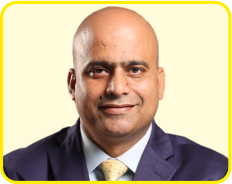
Prof. (Dr.) Rana Singh
Director, CIMP
It gives me immense pleasure to extend my warm greetings to all participants of the Fourth International Conference on Public Policy and Management (ICPPM), 2026. I commend the Centre for Public Policy at Chandragupt Institute of Management Patna and the Public Finance Research Cluster at Georgia State University for convening this timely and intellectually significant conference.
We meet at a moment when the world faces a profound polycrisis—a convergence of climate change, economic instability, public health risks, technological disruption, democratic pressures, and widening social inequalities. These interconnected challenges are reshaping governance landscapes and testing the resilience of public institutions across the globe. Traditional policy approaches, designed for relatively stable environments, are increasingly inadequate for addressing the complexity and interdependence that define our times.
For countries of the Global South, including India, these crises are layered on structural development deficits, climate vulnerabilities, and institutional constraints. Yet this context also presents an opportunity—to reimagine governance through evidence-informed policymaking, digital public infrastructure, adaptive institutions, and equity-centred approaches. Initiatives such as digital inclusion, climate-resilient agriculture, and regionally targeted development programmes demonstrate how innovation can coexist with inclusivity when guided by strong institutional commitment.
This conference provides an important platform to critically reflect on evolving policy paradigms and to foster dialogue among scholars, policymakers, and practitioners. I am confident that the deliberations will generate actionable insights to strengthen institutional capacity and contribute meaningfully to inclusive and sustainable development, particularly in Bihar and similar contexts.
I wish the conference great success and look forward to its impactful outcomes.

Prof. Charles Hankla
Georgia State University
It is an honour to be part of the Fourth International Conference on Public Policy and Management (ICPPM), 2026. I congratulate the organisers for foregrounding the theme of public policy in an era of polycrisis—an issue that lies at the heart of contemporary governance debates.
The defining feature of our time is not the presence of isolated crises, but their simultaneity and interaction. Climate shocks amplify economic fragility; technological disruption intersects with labour informality; public health emergencies expose deep social inequities. In such an environment, policy must move beyond siloed interventions toward systems thinking, adaptive governance, and long-term resilience.
The polycrisis challenges us to rethink three foundational pillars of public policy: evidence, equity, and institutional capacity. Advances in data systems, digital public infrastructure, and impact evaluation offer powerful tools for improving targeting, accountability, and transparency. Yet technology alone cannot substitute for institutional trust, ethical governance, and political economy awareness. Policy innovation must remain attentive to distributional consequences and democratic legitimacy.
In India, initiatives such as regionally targeted development programmes, digital transfers, and climate-responsive agricultural interventions demonstrate both the promise and the complexity of policy reform in constrained environments. The lessons emerging from these experiences are highly relevant not only nationally but globally—particularly for the Global South.
This conference offers a valuable opportunity to bridge theory and practice, encouraging dialogue that is rigorous, multidisciplinary, and policy-relevant. I hope our collective deliberations will contribute to shaping public policy that is more resilient, inclusive, and responsive to uncertainty.
I look forward to engaging in discussions and meaningful collaboration.
- To critically assess the implications of polycrisis for public policy design and governance.
- To examine emerging evidence-based and adaptive policy approaches across sectors.
- To explore equity-centred policy frameworks addressing gender, regional, and socio-economic disparities.
- To bridge theory and practice by engaging academics, policymakers, and practitioners.
- To generate actionable insights for strengthening institutional capacity and policy resilience.
Conference Theme:
Public Policy In Times Of Polycrisis: Rethinking Governance, Evidence And Equity
Conference Tracks:
- Evidence-Based Policymaking and Policy Learning
- Climate Change, Sustainability, and Policy Resilience
- Decentralization, Local Governance, and State Capacity
- Health, Education, and Human Development under Polycrisis
Conference Activities:
- Keynote addresses, Plenary Sessions, Special Addresses, Technical Sessions, Panel Discussions, Policy Evaluation Master class.
- Special session on Environmental Policy, Governance and Biodiversity: Role of Institution, Society and Community, in collaboration with Bihar State Biodiversity Board, Government of Bihar.
Pre-Conference Workshop:
- Pre-conference workshop on Evaluation of Public Policy on day before the conference
- Unpublished papers are requested from researchers, practitioners, policymakers, and thought leaders to submit papers addressing the conference theme and mentioning the conference track.
- Submit your Abstract/Full paper at: icppm@cimp.ac.in
- Prof. Anjali Thomas, Georgia Institute of Technology, Atlanta, USA
- Prof. Subhasis Dey, Department of Economics, University of Warwick, UK
- Dr. Arjun Teotia, Michigan State University, USA
- Vaibhav Chaudhary, University of Campinas, Brazil
- Dr. Utsav Singh, Georgia State University
- Academic and R&D Institutes - faculties
- Policymakers and Government agencies
- Industry practitioners, PSUs, Development Organization, Civil Society
- Policy Evaluation Specialist
- Researchers/academicians
Venue: Chandragupt Institute of Management, Patna, Bihar
Date: 2nd and 3rd July 2026
Chandragupt Institute of Management Patna (CIMP) has been established as an autonomous institution, with active support from the Government of Bihar in the year 2008. The Honourable CM Shri. Nitish Kumar happens to be the Chairman of the institute. It is approved by AICTE, Ministry of HRD, Government of India. The flagship programme of the institute of accredited by NBA and approved by AIU.
The Institute conducts the following major programmes:
- Fellow Programme in Management (FPM)
- Two-Year Post Graduate Programme in Management (PGDM)
- Two-Year Post Graduate Programme in Management (PGDM-IEV)
- Executive programme in management for Government officials (EXPM)
- Management Development programme (MDP)
The Centre for Public Policy (CPP) at Chandragupt Institute of Management Patna (CIMP) was established to evolve as an avant-garde public policy think-tank; engaged in policy research, analysis, debate, capacity building and consulting, catalysing fast-tracked, inclusive, and sustainable societal development. The Centre has been researching various domains and dimensions of public policy. Under the aegis of the centre, a large number of projects on a wide spectrum of public policy issues like drinking water, agriculture, education, land issues, and social impact assessments, have been conducted and these projects have provided evidence-based policy suggestions to different departments of the state and central government. Its activities encompass rigorous analysis of policies related to sustainability, climate change, across different layers of government, and specialized executive training for practitioners in public policy and public finance, including policy implementation, monitoring and evaluation. By combining high-quality empirical research, policy advisory services, and capacity building of scholars, policy makers and implementers, the CPP strengthens both academic and real-world policy effectiveness in the field of public policy.
Georgia State University (GSU), founded in 1913, is a premier urban research university located in Atlanta, Georgia. Committed to excellence in education, diversity, and community engagement, GSU offers over 250 degree programs across various disciplines. The Public Finance Research Cluster (PFRC) at the Andrew Young School of Policy Studies (AYSPS), Georgia State University in Atlanta, is a leading hub for nonpartisan public finance research, education, and technical assistance. PFRC integrates three specialized centers—the Fiscal Research Center (FRC), the Center for State and Local Finance (CSLF), and the International Center for Public Policy (ICePP)—to advance rigorous analysis of taxation, budgeting, economic development, and public financial management. PFRC’s mission is to inform decision-makers, strengthen public-sector capacity, and shape effective fiscal governance in the U.S. and globally through evidence-based research, policy evaluations, and training programs. Its work includes state tax policy evaluations, revenue forecasting, fiscal decentralization support for governments worldwide, and executive education for public finance professionals. The cluster also offers the Public Finance Fellowship, giving graduate students practical research experience alongside expert faculty. Through its research, technical assistance, and student development programs, PFRC enhances scholarly innovation and practical impact in public finance.
- Submission of Abstract/Full paper by: 31st May 2026
- Communication about acceptance: 15th June 2026
- Submission of Full Paper: 25th June 2026
- Registration Open: 15th May 2026
- Registration Close: 1st July 2026
- Conference dates : 2nd and 3rd July 2026
Submission Details to publish in Proceedings, Books, and Journals
- Abstract (250-300 words)/Full paper to be submitted by 31st May, 2026.
- Full Papers need to be submitted for Accepted Abstract by 25th June, 2026.
- Selected Full Papers will be considered for an Edited Volume/ Journal from an internationally reputed publisher.
Conference Secretariat :
Email: icppm@cimp.ac.in
Telephone: +91 612 2366004, 2366015, 2366021
Patron:
Prof. (Dr.) Rana Singh
Director, CIMP
Convenors:
Prof. Charles Hankla
Georgia State University, USA

Prof. Debabrata Samanta
Assistant Professor, CIMP

Mr. Kumod Kumar
Chief Administrative Officer, CIMP
Advisory Committee:
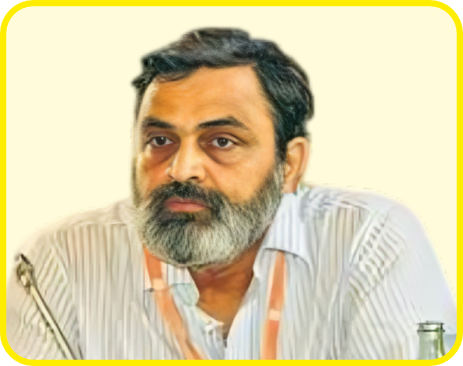
Shri Tripurari Sharan, IAS (Retd)
Chief Information Commissioner, Former Chief Secretary, Government of Bihar
Prof. Charles Hankla
Georgia State University, USA

Prof. Anjali Thomas
Georgia Institute of Technology, Atlanta, GA
Members:
- Dr. Utsav Kumar Singh, Georgia State University (External Member)
- Prof. Sunil Kumar, Professor of Practice, CIMP
- Prof. Sibananda Senapati, Associate Professor, CIMP
- Prof. Ranjit Tiwari, Associate Professor, CIMP
- Prof. Sriranga Vishnu, Assistant Professor, CIMP
- Prof. Nitish Nigam, Assistant Professor, CIMP
- Prof. Manish Mohan, Assistant Professor, CIMP
- Registered presenters will be provided accommodation on the institute campus.
- Limited Travel grants are available for registered paper presenters
The contemporary world is witnessing an unprecedented convergence of crises, climate change, economic volatility, public health emergencies, technological disruption, democratic stress, and widening social inequalities. These overlapping and mutually reinforcing challenges, often described as a polycrisis, have fundamentally altered the context within which public policy is designed, implemented, and evaluated.
Traditional policy frameworks—characterized by sectoral silos, linear planning, and short-term horizons—are increasingly inadequate to address complex, systemic, and uncertain policy environments. The polycrisis demands a rethinking of governance arrangements, a renewed commitment to evidence-informed policymaking, and a sharper focus on equity and inclusion to ensure that policy responses do not exacerbate existing vulnerabilities. At the same time, new opportunities are emerging. Advances in data systems, digital public infrastructure, impact evaluation methods, and participatory governance offer pathways to more adaptive, responsive, and accountable public policy. However, these innovations also raise important questions around state capacity, ethics, inclusion, and political economy.
Countries of Global South like India confronts polycrisis conditions with structurally constrained state capacity, high informality, climate vulnerability, demographic pressure, and deep socio-economic inequalities. Unlike advanced economies, crises in the Global South are not episodic but often chronic and overlapping, combining development deficits with new global shocks. In India, recent policy responses—such as the Aspirational Districts and Blocks Programme, Digital Public Infrastructure (Aadhaar, DBT), climate-resilient agriculture initiatives, and women-centered development schemes—illustrate both innovation and implementation challenges.
The fourth International Conference on Public Policy and Management (ICPPM), 2026 being organized under the aegis of the Centre for Public Policy, Chandragupt Institute of Management Patna and Public Finance Research Cluster, Andrew Young School of Policy Studies, Georgia State University, Atlanta, USA, seeks to provide a multidisciplinary platform for scholars, policymakers, practitioners, and civil society actors to critically examine how public policy paradigms are evolving in response to polycrisis conditions. The conference aims to foster dialogue on how public policy can become more resilient, inclusive, and effective in navigating uncertainty and complexity. It will have a particular focus on how insights from this discussion, as well as ongoing collaboration among the participants, can contribute to economic and social development in Bihar.
Conference Date: 2nd and 3rd July 2026
Prof. (Dr.) Rana Singh
Director, CIMP
It gives me immense pleasure to extend my warm greetings to all participants of the Fourth International Conference on Public Policy and Management (ICPPM), 2026. I commend the Centre for Public Policy at Chandragupt Institute of Management Patna and the Public Finance Research Cluster at Georgia State University for convening this timely and intellectually significant conference.
We meet at a moment when the world faces a profound polycrisis—a convergence of climate change, economic instability, public health risks, technological disruption, democratic pressures, and widening social inequalities. These interconnected challenges are reshaping governance landscapes and testing the resilience of public institutions across the globe. Traditional policy approaches, designed for relatively stable environments, are increasingly inadequate for addressing the complexity and interdependence that define our times.
For countries of the Global South, including India, these crises are layered on structural development deficits, climate vulnerabilities, and institutional constraints. Yet this context also presents an opportunity—to reimagine governance through evidence-informed policymaking, digital public infrastructure, adaptive institutions, and equity-centred approaches. Initiatives such as digital inclusion, climate-resilient agriculture, and regionally targeted development programmes demonstrate how innovation can coexist with inclusivity when guided by strong institutional commitment.
This conference provides an important platform to critically reflect on evolving policy paradigms and to foster dialogue among scholars, policymakers, and practitioners. I am confident that the deliberations will generate actionable insights to strengthen institutional capacity and contribute meaningfully to inclusive and sustainable development, particularly in Bihar and similar contexts.
I wish the conference great success and look forward to its impactful outcomes.
Prof. Charles Hankla
Georgia State University
It is an honour to be part of the Fourth International Conference on Public Policy and Management (ICPPM), 2026. I congratulate the organisers for foregrounding the theme of public policy in an era of polycrisis—an issue that lies at the heart of contemporary governance debates.
The defining feature of our time is not the presence of isolated crises, but their simultaneity and interaction. Climate shocks amplify economic fragility; technological disruption intersects with labour informality; public health emergencies expose deep social inequities. In such an environment, policy must move beyond siloed interventions toward systems thinking, adaptive governance, and long-term resilience.
The polycrisis challenges us to rethink three foundational pillars of public policy: evidence, equity, and institutional capacity. Advances in data systems, digital public infrastructure, and impact evaluation offer powerful tools for improving targeting, accountability, and transparency. Yet technology alone cannot substitute for institutional trust, ethical governance, and political economy awareness. Policy innovation must remain attentive to distributional consequences and democratic legitimacy.
In India, initiatives such as regionally targeted development programmes, digital transfers, and climate-responsive agricultural interventions demonstrate both the promise and the complexity of policy reform in constrained environments. The lessons emerging from these experiences are highly relevant not only nationally but globally—particularly for the Global South.
This conference offers a valuable opportunity to bridge theory and practice, encouraging dialogue that is rigorous, multidisciplinary, and policy-relevant. I hope our collective deliberations will contribute to shaping public policy that is more resilient, inclusive, and responsive to uncertainty.
I look forward to engaging in discussions and meaningful collaboration.
- To critically assess the implications of polycrisis for public policy design and governance.
- To examine emerging evidence-based and adaptive policy approaches across sectors.
- To explore equity-centred policy frameworks addressing gender, regional, and socio-economic disparities.
- To bridge theory and practice by engaging academics, policymakers, and practitioners.
- To generate actionable insights for strengthening institutional capacity and policy resilience.
Conference Theme:
Public Policy In Times Of Polycrisis: Rethinking Governance, Evidence And Equity
Conference Tracks:
- Evidence-Based Policymaking and Policy Learning
- Climate Change, Sustainability, and Policy Resilience
- Decentralization, Local Governance, and State Capacity
- Health, Education, and Human Development under Polycrisis
Conference Activities:
- Keynote addresses, Plenary Sessions, Special Addresses, Technical Sessions, Panel Discussions, Policy Evaluation Master class.
- Special session on Environmental Policy, Governance and Biodiversity: Role of Institution, Society and Community, in collaboration with Bihar State Biodiversity Board, Government of Bihar.
Pre-Conference Workshop:
- Pre-conference workshop on Evaluation of Public Policy on day before the conference
- Unpublished papers are requested from researchers, practitioners, policymakers, and thought leaders to submit papers addressing the conference theme and mentioning the conference track.
- Submit your Abstract/Full paper at: icppm@cimp.ac.in
- Prof. Anjali Thomas, Georgia Institute of Technology, Atlanta, USA
- Prof. Subhasis Dey, Department of Economics, University of Warwick, UK
- Dr. Arjun Teotia, Michigan State University, USA
- Vaibhav Chaudhary, University of Campinas, Brazil
- Dr. Utsav Singh, Georgia State University
- Academic and R&D Institutes - faculties
- Policymakers and Government agencies
- Industry practitioners, PSUs, Development Organization, Civil Society
- Policy Evaluation Specialist
- Researchers/academicians
Venue: Chandragupt Institute of Management, Patna, Bihar
Date: 2nd and 3rd July 2026
Chandragupt Institute of Management Patna (CIMP) has been established as an autonomous institution, with active support from the Government of Bihar in the year 2008. The Honourable CM Shri. Nitish Kumar happens to be the Chairman of the institute. It is approved by AICTE, Ministry of HRD, Government of India. The flagship programme of the institute of accredited by NBA and approved by AIU.
The Institute conducts the following major programmes:
- Fellow Programme in Management (FPM)
- Two-Year Post Graduate Programme in Management (PGDM)
- Two-Year Post Graduate Programme in Management (PGDM-IEV)
- Executive programme in management for Government officials (EXPM)
- Management Development programme (MDP)
The Centre for Public Policy (CPP) at Chandragupt Institute of Management Patna (CIMP) was established to evolve as an avant-garde public policy think-tank; engaged in policy research, analysis, debate, capacity building and consulting, catalysing fast-tracked, inclusive, and sustainable societal development. The Centre has been researching various domains and dimensions of public policy. Under the aegis of the centre, a large number of projects on a wide spectrum of public policy issues like drinking water, agriculture, education, land issues, and social impact assessments, have been conducted and these projects have provided evidence-based policy suggestions to different departments of the state and central government. Its activities encompass rigorous analysis of policies related to sustainability, climate change, across different layers of government, and specialized executive training for practitioners in public policy and public finance, including policy implementation, monitoring and evaluation. By combining high-quality empirical research, policy advisory services, and capacity building of scholars, policy makers and implementers, the CPP strengthens both academic and real-world policy effectiveness in the field of public policy.
Georgia State University (GSU), founded in 1913, is a premier urban research university located in Atlanta, Georgia. Committed to excellence in education, diversity, and community engagement, GSU offers over 250 degree programs across various disciplines. The Public Finance Research Cluster (PFRC) at the Andrew Young School of Policy Studies (AYSPS), Georgia State University in Atlanta, is a leading hub for nonpartisan public finance research, education, and technical assistance. PFRC integrates three specialized centers—the Fiscal Research Center (FRC), the Center for State and Local Finance (CSLF), and the International Center for Public Policy (ICePP)—to advance rigorous analysis of taxation, budgeting, economic development, and public financial management. PFRC’s mission is to inform decision-makers, strengthen public-sector capacity, and shape effective fiscal governance in the U.S. and globally through evidence-based research, policy evaluations, and training programs. Its work includes state tax policy evaluations, revenue forecasting, fiscal decentralization support for governments worldwide, and executive education for public finance professionals. The cluster also offers the Public Finance Fellowship, giving graduate students practical research experience alongside expert faculty. Through its research, technical assistance, and student development programs, PFRC enhances scholarly innovation and practical impact in public finance.
- Submission of Abstract/Full paper by: 31st May 2026
- Communication about acceptance: 15th June 2026
- Submission of Full Paper: 25th June 2026
- Registration Open: 15th May 2026
- Registration Close: 1st July 2026
- Conference dates : 2nd and 3rd July 2026
Submission Details to publish in Proceedings, Books, and Journals
- Abstract (250-300 words)/Full paper to be submitted by 31st May, 2026.
- Full Papers need to be submitted for Accepted Abstract by 25th June, 2026.
- Selected Full Papers will be considered for an Edited Volume/ Journal from an internationally reputed publisher.
- Registered presenters will be provided accommodation on the institute campus.
- Limited Travel grants are available for registered paper presenters
Patron:
Prof. (Dr.) Rana Singh
Director, CIMP
Convenors:
Prof. Charles Hankla
Georgia State University, USA
Prof. Debabrata Samanta
Assistant Professor, CIMP
Mr. Kumod Kumar
Chief Administrative Officer, CIMP
Advisory Committee:
Shri Tripurari Sharan, IAS (Retd)
Chief Information Commissioner, Former Chief Secretary, Government of Bihar
Prof. Charles Hankla
Georgia State University, USA
Prof. Anjali Thomas
Georgia Institute of Technology, Atlanta, GA
Members:
- Dr. Utsav Kumar Singh, Georgia State University (External Member)
- Prof. Sunil Kumar, Professor of Practice, CIMP
- Prof. Sibananda Senapati, Associate Professor, CIMP
- Prof. Ranjit Tiwari, Associate Professor, CIMP
- Prof. Sriranga Vishnu, Assistant Professor, CIMP
- Prof. Nitish Nigam, Assistant Professor, CIMP
- Prof. Manish Mohan, Assistant Professor, CIMP